Hi everyone, welcome back to my new post. This post is going to talk about a case in autoimmunity.
What is Autoimmunity?
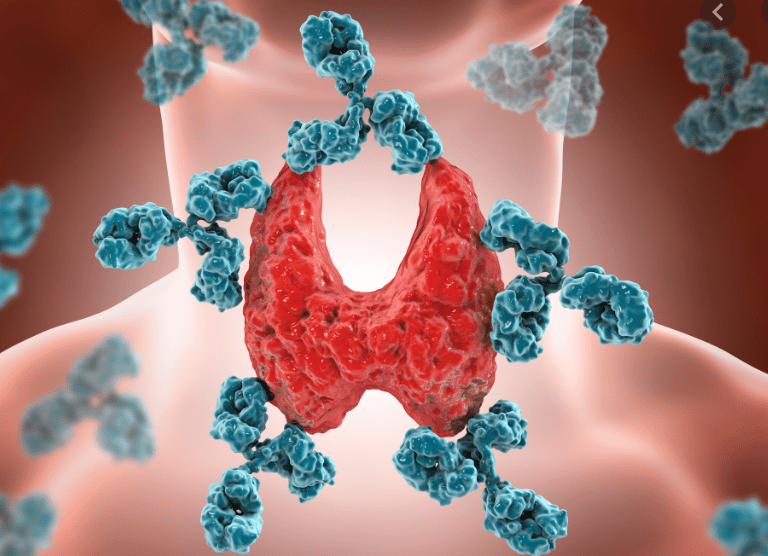
Autoimmunity is the failure of the body’s immune system to recognise its own cells and tissues as “self”, this leads to the immune response launching against these cells and tissues as it thinks its “foreign.”

Types of common autoimmunity diseases?
When an autoimmunity occurs within the body it can either cause an abnormally low activity or over activity of the immune system. Autoimmune diseases are usually caused by over activity of the immune system. Some examples of autoimmune diseases are:
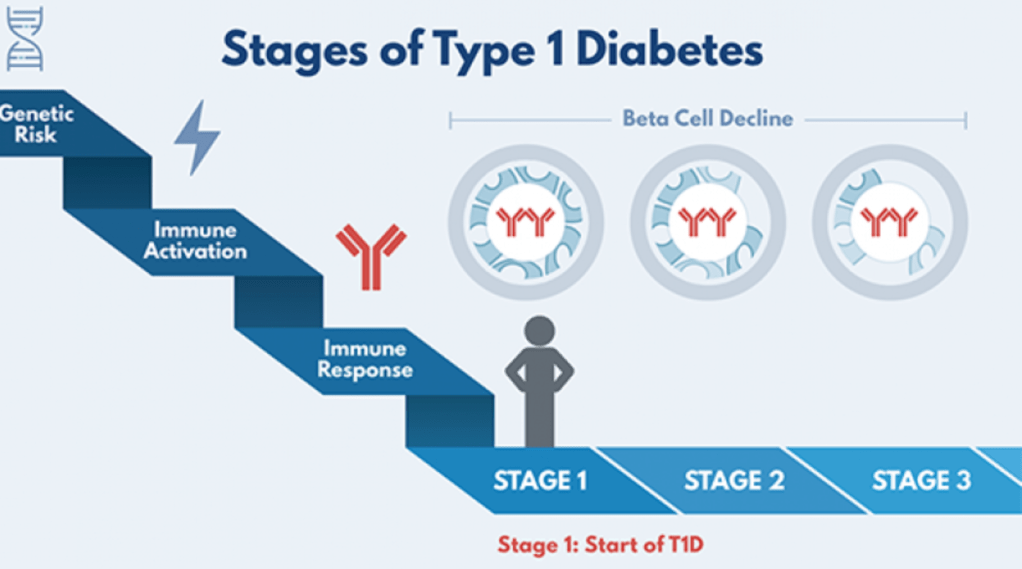
How can autoimmune disease occur?
Autoimmune diseases can be hereditary. This means if a family member has an autoimmune disease you could possibly develop it in the future due to genetic reasons. Other factors are also important and include diet, drugs, infection and non-infectious environmental agents. Given these links however the specific causes of each autoimmune disease are generally unknown although scientists are working hard to find out.

- Autoimmune Thyroiditis
- Graves’ disease
- Rheumatoid arthritis
- Systemic Lupus Erythematosus
- Type 1 Diabetes
- Pernicious Anaemia
- Dermatomyositis

Case:
A female visited her doctors and showed to have a continuous rash on her hand.
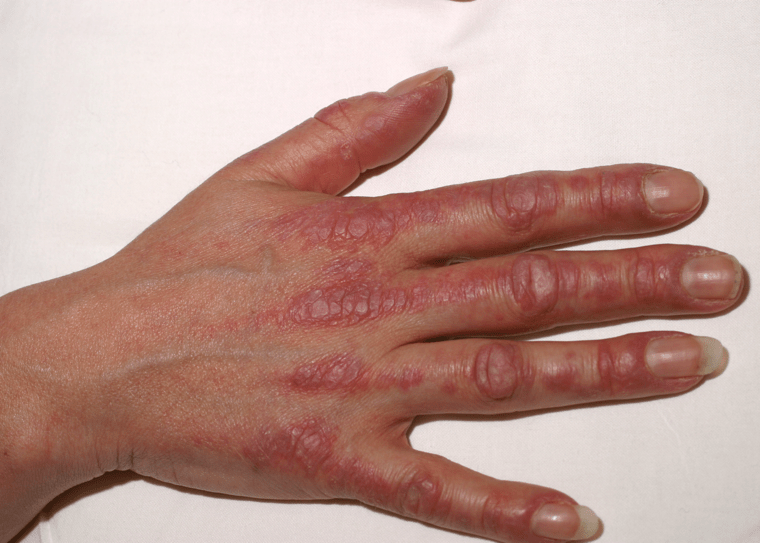
A blood sample was taken from the patient and results for the full blood count, urea, electrolytes, liver blood test and C- reactive protein all appeared to be normal.
However, the patient showed to have an abnormal level of Creatine Kinase (CK) of 192 IU/L (reference range 25-145 IU/L). The patient also showed to have positive antinuclear antibodies. But the results for the extractable nuclear antigens were shown to be negative.
After the blood results of the patient, the rash spread to her face and the patient showed to become weak with muscle pain (symmetric) mostly in the upper arms. So more bloods were taken from the patient.

The new set of results showed that patients CK level increased to 5506 IU/L. The patient was referred to the Rheumatology OPD and a planned inpatient investigation was carried out.
Bloods were taken a third time and the CK level had increased 10764 IU/L. Further immunology results showed no changes to ANA and a myositis associated antibody test was carried which showed to be negative.
To further investigate an MRI of the thighs was carried out and results showed the appearance to be consistent with acute multifocal myositis. To further investigate an MRI of the thighs was carried out and results showed the appearance to be consistent with acute multifocal myositis.
This led to the final diagnosis of Dermatomyositis.
What is Dermatomyositis?
Dermatomyositis is a type of myositis. It is a disease that causes chronic muscle inflammation and weakness. This affects the muscles and connective tissues of the body. Progressive muscle weakness can lead to complications.
Symptoms:
- Distinctive rash
- Muscle weakness
- Achy or painful muscles or feeling very tiredS
- wallowing problems
- Feeling unhappy or depressed
- Finding it difficult to sit up or stand after a fall
The patient was diagnosed with Dermatomyositis due to the patient suffering from symmetric proximal muscle weakness, the typical rash of dermatomyositis and the elevated serum muscle enzyme. The mypoathic changes and the characteristic muscle biopsy abnormalities and the absence of histopathologic signs of other myopathies aided in the diagnosis of Dermatomyositis.
As mentioned previously the patient was treated in rheumatology with prednisolone and methotrexate. However, the patient was referred to immunology due to failing to respond the treatment. An agreement was made that the patient will be treated with IVIg (intravenous gammaglobulin), which was a success. These drugs allow the clinician treating the patient to control and modify the immune response. By doing this they are able to successfully dampen down the autoimmune reaction so that the symptoms are reduced to levels that allow the patient to lead a relatively normal life.
Thank you for taking your time to read this post. In the future I hope to write more immunological cases, leave a comment if you liked this post and would like to see more cases in the future.
A special thanks to Andy, Chief Biomedical Scientist, for helping me.
 A Muggle's Laboratory
Leave a comment