Hi everyone welcome back.
I have recently completed by third rotation on the Aquios flow cytometer which was different from the Covid analyser and something new. This post is going to give you an insight of how the immunology department plays a role in HIV and immunodeficiency testing.
So sit back, grab a brew and happy reading.
What is the Aquios:
The Aquios CL flow cytometry system is the first true load and go flow cytometer. The Aquios is an analyser that was created to reduce the amount of time spent on sample preparation and data management. This automated processor reduces the time spent on tasks which increases the laboratory productivity.

The analyser does this by having a system that combines sample preparation and analysis onto one platform.
What does it test for?
The Aquios is used as in vitro diagnostic device for immunophentotyping. It is used alongside two main reagents:
- Aquios Tetra-1 Panel monoclonal antibody reagents
- Aquios Tetra-2+ Panel monoclonal antibody reagents
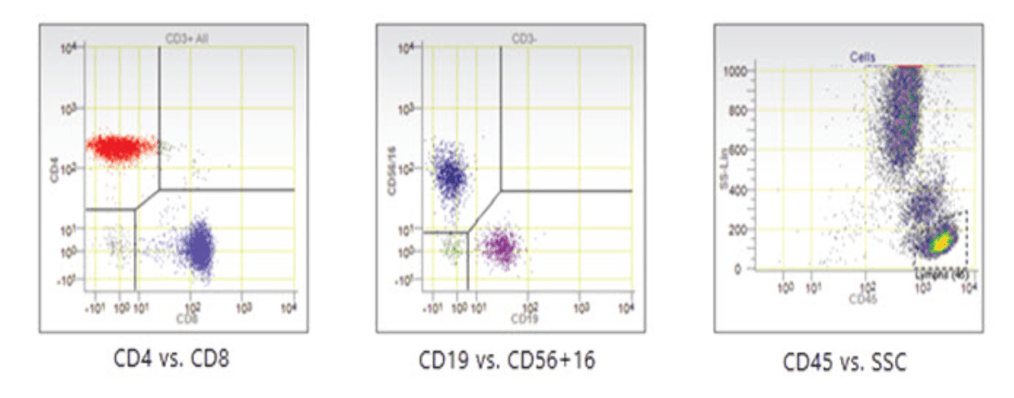
The Tetra-1 Panel monoclonal antibody reagents is used in the identification and enumeration of total CD3+, CD3+CD4+, CD3+CD8+, CD4:CD8 ratio, lymphocyte percentages and absolute counts in peripheral whole blood.
Whereas the Tetra-2+ Panel monoclonal antibody reagents is used in the identification of total CD3+, CD3-CD19+, CD3-CD56+ and/or CD16+ lymphocyte percentages and absolute counts in peripheral whole blood.
These reagents are used in the immunological assessment of patients having or suspected of having immunodeficiency, as well as for immune monitoring of HIV infection.
The immunology department where I work has two AQUIOS CL Flow Cytometry systems and the associated software. Both of the analysers are linked so that they can both run and be used independently of each other in the analysis of samples and reviewing results.
My day on the Aquios machine:
On a morning I carry out all the maintenance to keep the analyser in optimum condition for the tests that are going to be carried out throughout the day. Morning maintenance include removing the waste fluid and cleaning the probe station with sodium hypochlorite solution and deionised water.
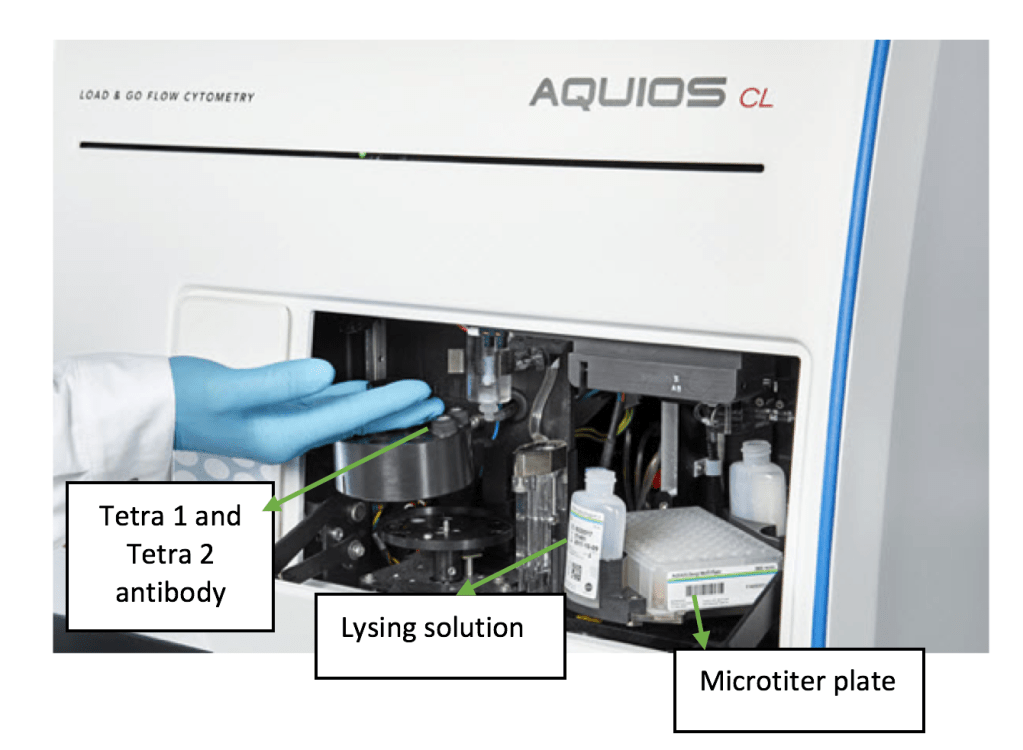
I then place the Tetra 1 and 2 monoclonal antibodies, sodium hypochlorite solution, lysing solution A and B onto the analyser and start the machine. The analyser scans all the reagents and ensures that there is enough solution for each of the reagents for me to proceed onto the next steps.
I then run the Immunotrol quality controls; Immunotrol normal and Immunotrol Low. They are used for internal quality control and are tested before the analysis of patients’ samples. The values obtained from the Immunotrol controls are transferred onto a software called Unity where it is reviewed by a Biomedical Scientist. The percentages and absolute counts must fall within the acceptable limits and pass using the quality control (QC) module of the Levy Jennings plots in Unity. This is done to make sure that both of the Aquios flow cytometer are functioning optimally.
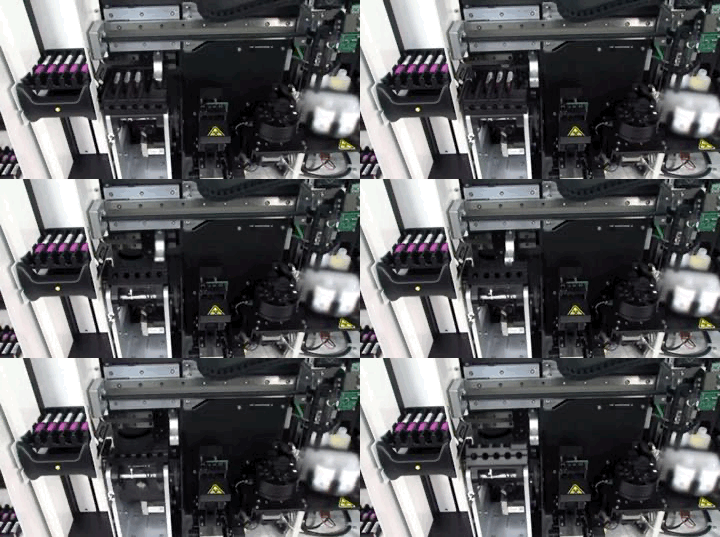
Once the Immunotrol controls have passed in Unity, a BMS checks that the gating is correct and records the percentage and absolute counts from the Aquios onto the QC sheet. After everything has passed and been signed for I can start loading specimens on to the analyser.
Aquios work flow:
Prepping:
The specimens go into the analyser
Some of the specimen is dispensed into a micrometer plate.
The microsite plate contains antibodies labelled with fluorescent dyes
Incubating:
The solution undergoes an incubation period of 15 minutes
Lysing:
Lysing reagent A is added to the well and mixed
Lysing reagent B is added to the well and mixed
Analysis
The solution is mixed, aspirated and passed through a flow cell.
The cells are analysed by a 4 fluorescent detection channels using a blue laser and 2 light scatter detection channels and electronic volume
Each fluorescently labelled antibody can be detected and therefore each type of cell is identified.
My experience:
The Aquios flow cytometer was different to The Elecsys Anti-SARS-coV-2 assay and more simpler in its work flow. There was less maintenance involved on this analyser in comparison to the Elecsys assay.
This analyser gave me the opportunity to understand more on how immunological diseases at a cellular level are tested for. It also showed the role both the haematology and immunology departments have in diagnosis of diseases.
The Aquios is a great analyser to test multitasking skills as there is a lot of things happening at once for example; samples coming up from sample reception, reagents that need replacing after been used up by the analyser or patient forms need filling out completing for the immunodeficiency tests and cellular requests cards that need checking. Timing and being organized is very important on this analyser and knowing which days and time of day are considered the peak period. There were certain days where I was running both the Aquios and specimen reception together and this allowed me to work under pressure and organise my day based on the important tasks. It is important that samples are run as soon as possible to meet the department turn around times and run possible urgent samples on time.
Overall the Aquios was an enjoyable experience. It allowed me to put my skills I have developed overtime to use. It also gave me the opportunity to learn and understand more on how the immunology department plays a role in the cellular section. I developed new knowledge and skills which I can’t wait to put to use and felt very confident in myself when using the analyser.
Thank you for taking your time in reading this, I hope you enjoyed this post. Leave a comment if you have any questions!!
 A Muggle's Laboratory
Leave a comment