Hi everyone welcome back.
For my second rotation I have been rotated onto the Covid Antibody testing which I was very excited about. This post is going to give you an insight of how the immunology department plays a role in Covid testing.
So sit back, grab a brew and happy reading.
What is Covid?
The Covid 19 or SARS-CoV-2 virus comes from the family of viruses known as Coronaviridae. It is a single stranded enveloped RNA virus that is zoonotic (infection that can be passed from animals to humans). They are many different types of coronaviruses but they have similarities in the organisation and expression of their genome.
Their genome encodes for 16 non-structural proteins, 4 structural proteins spike, envelope, and membrane and a nucleo capsid. These structures are known as the viruses’ virulence factors and allow it to survive our immune system’s response, multiply and produce the symptoms that make us ill. This family of virus can cause diseases ranging from a mild common cold to severe Acute Respiratory Syndrome (SARS).

How is it transmitted?
SARS-CoV-2 is transmitted person to person via respiratory droplets but can also be transmitted through contaminated surfaces, which is why washing your hands is really important during this pandemic. The virus incubates (multiplies) within a person between 2-14 days after being exposed to the virus. However, it is still not known when a person is thought to be infectious (when you can transmit the virus to others).

What are the symptoms?
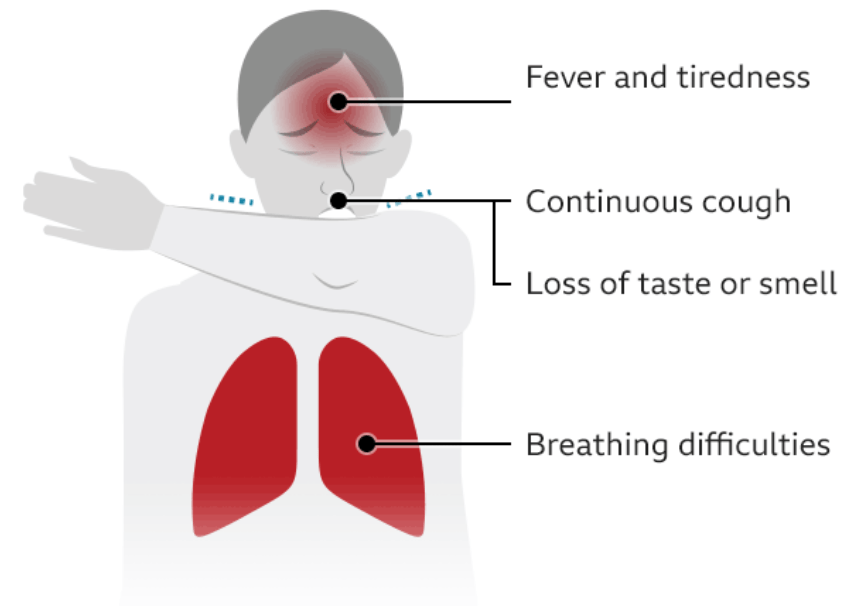
Those infected with SARS-CoV-2 exhibit the following symptoms:
- Fever
- Cough
- Fatigue
- Sputum production
- Loss of smell
- Shortness of breath
The symptoms for each individual person are different and can vary from being mild to critical; however, most cases are not severe
.
Who is more at risk?
Adults that are more at risk include those with:
- Hypertension
- Diabetes mellitus
- Cardiovascular disease
- Respiratory disease
What is the Covid serological assay?
The Elecsys Anti-SARS-coV-2 assay uses a recombinant protein representing the nucleocapsid antigen for the determination of antibodies against SARS-coV-2.
The assay is used to identify those that have been exposed to the virus, as well as provide data on the exposure of the population. The information and results obtained from the assay can be used to enforce, apply or relax precautions set across the UK.
How does the test work?
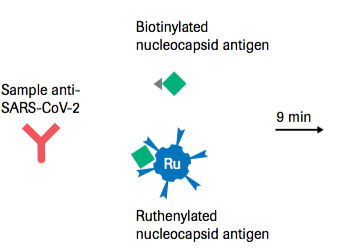
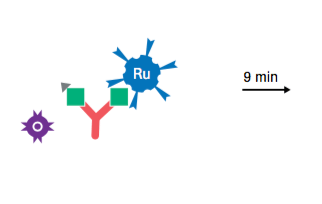
Around 20µl/ 12µl of the patient sample gets incubated with a mix of biotinylated and ruthenylated nucleocaspid (N) antigen. In the presence of corresponding antibody it would result in a double antigen sandwhich immune complex, due to the presence of the two antigens. This can be seen in the next image. It is then incubated for 9 minutes.
Streptavidin coated microparticles (in purple) are added into the assay and the DAGS complexes binds to the solid phase (a molecule bound to a solid surface) via interaction of biotin and streptavidin. It is then incubated for a further 9 minutes.

The mixtures containing all the bound products are transferred into a measuring cell, where everything is captured magnetically onto the surface of the electrode. A voltage to the electrode is applied which induces a chemiluminescent emission (light production) that is measured by something called a photomultiplier tube.
How are the results interpreted?
The results are based on the cut off used by this assay. The cut of value for a negative result is <1.0 and for a positive result is ≥1.0. This cut off is only relevant for this assay. Other individual assays from different manufacturers used to test for Covid antibodies might give different results; hence, results from other manufacturers should not be used for comparison.
My day on Covid antibody assay testing
The Covid Assay takes place on a machine called the Cobas e801 which is an immunoassay analyser that is connected to the Cobas 8000. The Cobas 8000 prepares the samples before delivering them to the Cobas e801 on a tracking system.

The Elecsys Anti-SARS-coV-2 assay is my first assay and analyser that I am working with. As it was my first time on an analyser I was nervous and scared that I would break it. Especially when carrying out the maintenance as I am quite heavy handed. However my colleagues have been quite supportive and helpful when I have required the help, especially with the calibration and quality controls of the assay.
A typical day usually starts of by carrying out the maintenance of the analyser. Daily maintenance is carried out at different intervals; every day, fortnightly and monthly. I have been rotated to be on the Covid antibody section for three weeks and so far I have had the experience doing the weekly and fortnightly maintenance. The monthly maintenance will be carried out on my last week. The maintenance is carried out to make sure the analyser can run well throughout the day and prevent deposits building up on the probes. Daily maintenance includes cleaning all the probes and backing up all patient results and data. Fortnightly and monthly maintenance includes a more in depth cleaning of the analyser.
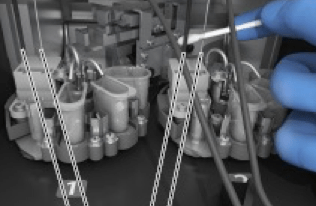

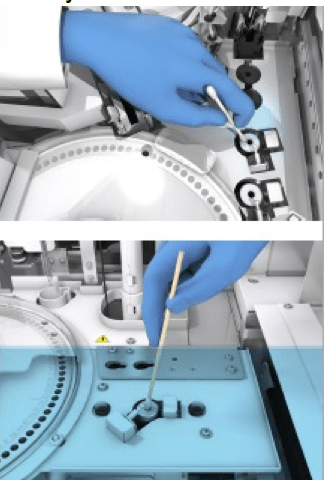
Once all the maintenance has been completed the reagent packs and quality control samples (QCs) are loaded.
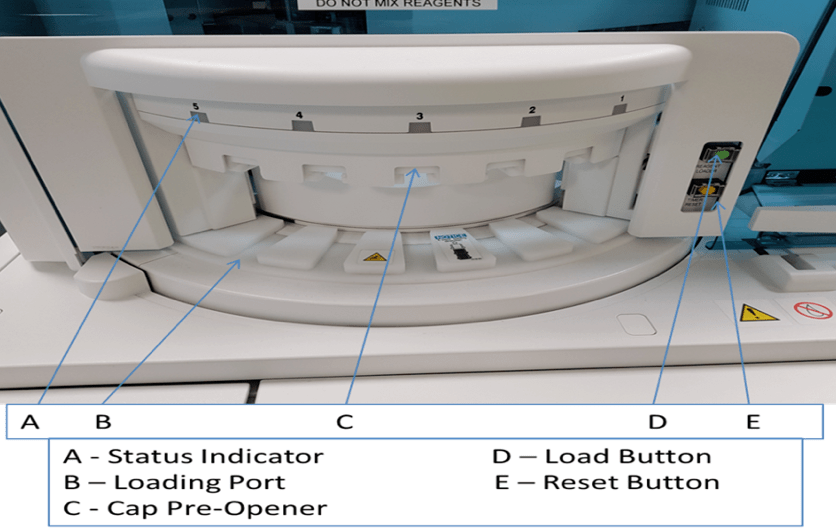
Calibration takes place only on Monday, Wednesday and Friday. This is due to the calibration packs having a shelf life of three days. Throughout the day the reagent packs are topped up if they are starting to run out. Every time a reagent pack is loaded, QCs are retested as well. The QCs are very important as they are used to determine if a result is positive or negative.
I was struggling to get my head around QCs and when you need to QCs as they are days where you only need to QC one section of the analyser and the other section doesn’t require it. It took some time, practise and experience to get my head around it and I’m fair to say I feel more confident now when carrying out the QC testing. Once all the QCs have passed a biomedical scientist (BMS) comes down to check and authorise it. Once everything has been checked and authorised by the BMS, the analyser is good to go.
All Covid samples are received and processed at central specimen reception (CSR) and then loaded onto the cobas 8000, where they get centrifuged before making its way down the track to the 8e01. The e801 can perform approximately 300 tests per hour and it takes approximately 18 minutes for one test to be completed.
Once the samples are loaded, I keep an eye on the system and make sure everything is getting processed and all the samples are going through. If they are any errors such as barcode errors, sample error or a failed sample, I deal with the trouble shooting and find out the problem and ‘front load’ the samples. The usual error that occurs is the sample’s barcode not been read or I find that the sample has not been booked in. In these cases I print out a new barcode or book the sample in to our laboratory information system called Apex.
Being on the The Elecsys Anti-SARS-coV-2 assay is enjoyable and a good learning experience. It has giving me the opportunity to develop my skills to run an analyser, how to deal with trouble shooting (for example if a QC or a calibration has failed) and generally becoming more confident in working independently in the laboratory.
With the current pandemic it shows the role the immunology department contributes to testing and research. I am very proud to be part of the immunology team running the Covid antibody test.
Thank you for taking your time on reading this post, leave a comment if you have any questions!!


 A Muggle's Laboratory
Leave a reply to muneebahj Cancel reply